

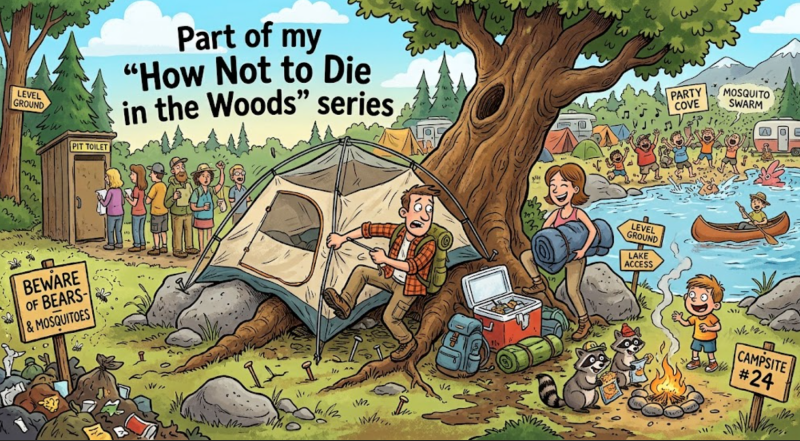
Picking a good campsite is part science, part instinct, and part hard-won lesson from that one time you got it wrong. Whether you're packing into the backcountry or pulling into a designated site at a state park campground, the difference between a great night and a miserable one usually comes down to a handful of avoidable mistakes. Here are seven of the most common; five for wilderness camping, two for car camping.
✦ In the Wild
1. Don't Camp in a Drainage or Dry Wash
That flat, sandy patch at the bottom of a gully looks like the most comfortable spot around—no roots, no rocks, nicely packed dirt. It's also exactly where water goes when it rains, even if the rain is falling on a ridge miles away. Dry washes and drainages can flood with startling speed, and a storm you never even see can turn your campsite into a streambed in the middle of the night. Look for slightly elevated, well-drained ground instead, even if it means a lumpier night's sleep.
2. Don't Camp Under Dead Trees or Widow-Makers
A dead standing tree, or a live tree with large dead limbs hanging in it, is sometimes called a "widow-maker" for a grim and literal reason. Wind, rain, or even a wandering squirrel can be enough to bring a limb down, and tents offer exactly zero protection. Before you commit to a spot, look up. Scan the canopy for dead branches, leaning trees, or trees with visible rot or fungus at the base. If something looks unstable, move—no view or convenient flat spot is worth the risk.
3. Don't Set Up Too Close to Water
A site right on the bank of a lake or stream is tempting: easy water access, nice scenery, cooler air. But camping too close to water causes real problems. It erodes fragile shoreline vegetation, disturbs wildlife that depends on that water source, and puts you at risk if water levels rise overnight. Most backcountry ethics, and many permit regulations, call for camping at least 200 feet from lakes and streams. Fill your water containers, then walk that distance back to camp.
4. Don't Ignore Wind Exposure and Terrain Funnels
An open ridge or a saddle between two peaks might catch a beautiful sunset, but it also catches wind, often a lot more than you'd expect from looking at a forecast. Exposed high points and narrow gaps between terrain features act like funnels, amplifying wind speed overnight. Unless you're specifically chasing a view and have gear rated for it, look for a site with some natural windbreak: a tree line, a low rise, or a bit of terrain between you and the prevailing wind direction.
5. Don't Overlook Signs of Wildlife Activity
Game trails, scat, tracks, claw marks on trees, or a strong animal odor are all signs that you've wandered into a well-used wildlife corridor or feeding area. Setting up camp in the middle of one is asking for an unwanted visitor at 2 a.m. This goes double near berry patches, carcasses, or anything that smells like food to a bear. Take a minute to read the ground before you pitch a tent, and give obvious animal highways a wide berth.
✦ At the Campground
6. Don't Pick a Site Without Checking What's Nearby
Car camping sites are pre-selected for you, but that doesn't mean every site in a campground is equal. A site backed up to the bathhouse means foot traffic and flushing toilets all night. A site near the entrance road catches headlights from late arrivals. A site next to the playground is a magnet for noise, possibly well past your bedtime. Before you book, or before you commit if you're choosing on arrival, look at a campground map or satellite view and think about sightlines and sound, not just square footage and convenience.
7. Don't Ignore Sun Exposure and Shade Timing
It's easy to book a campsite based on photos taken at golden hour and end up in full, unbroken sun by 8 a.m. Shade at a campground isn't just about comfort; it affects how early your tent turns into an oven, how long your cooler ice lasts, and how pleasant your morning coffee is. When possible, check satellite images to see which sites sit under tree cover versus open field, and consider which direction the site faces. A site with afternoon shade is usually worth more than one with a slightly bigger picnic table.
Good campsite selection is really just good risk assessment dressed up as outdoor skill—read the terrain, read the weather, read the signs the landscape is already giving you, and the rest of the trip tends to take care of itself.
Add comment
Comments